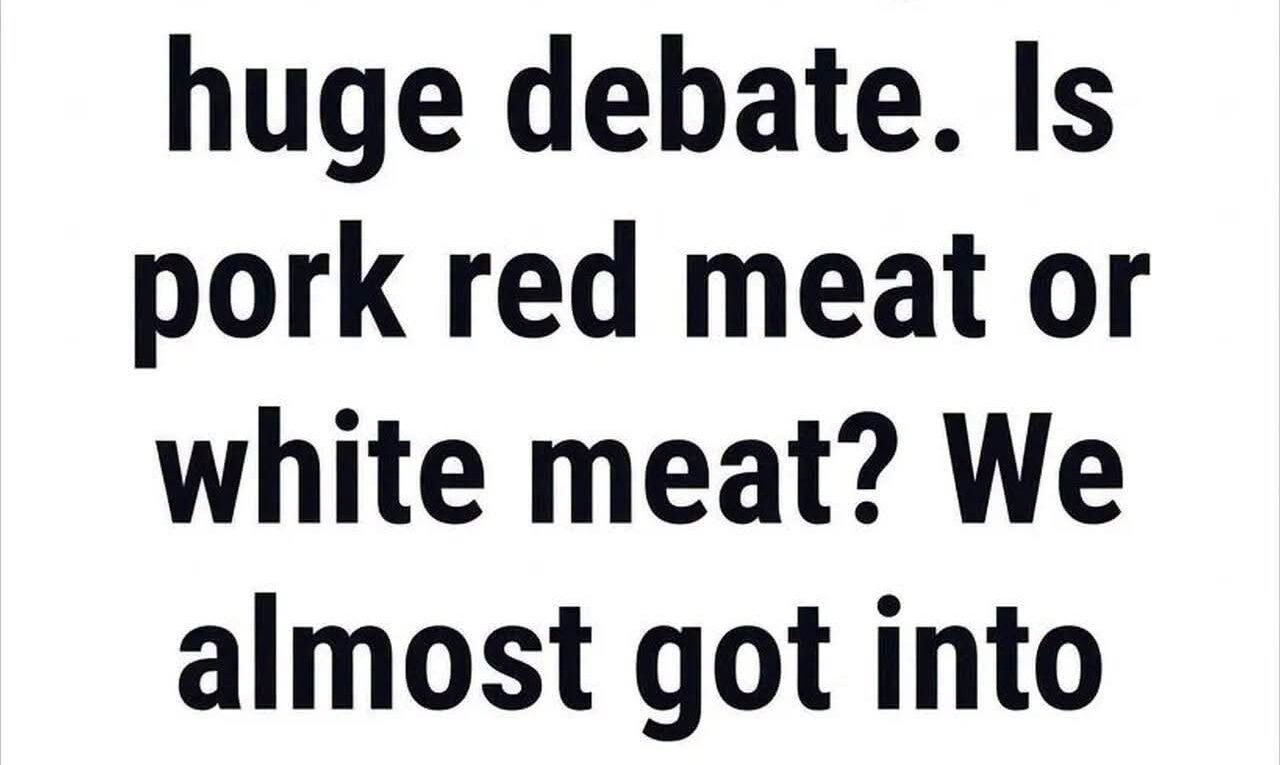
For many years, people have assumed that pork belongs in the same category as chicken and turkey. Much of that belief came from the memorable advertising slogan, “Pork. The Other White Meat.” The campaign was incredibly successful and changed how millions of consumers viewed pork. However, while the slogan highlighted pork as a leaner alternative to some other meats, it never changed the way scientists classify it. Despite its lighter appearance in some cuts, pork has always been considered red meat from a biological standpoint. This long-standing misconception is a great example of how powerful marketing can be in shaping public opinion, even when the scientific facts remain unchanged.
The reason pork is classified as red meat has nothing to do with how it looks after cooking. Instead, scientists use the amount of myoglobin, a protein found in muscle tissue that stores oxygen. Animals such as pigs, cows, and sheep naturally have higher levels of myoglobin than poultry like chickens and turkeys. Because of this, pork, beef, and lamb all fall into the red meat category. While certain cuts of pork may appear pale or almost white, color alone isn’t the deciding factor. The classification is based on biology rather than appearance, which explains why pork remains scientifically grouped with other meats from mammals.
Being labeled as red meat doesn’t automatically make pork unhealthy. In fact, many popular cuts are relatively lean and provide an excellent source of high-quality protein. Pork tenderloin and center-cut pork chops, for example, contain important nutrients such as vitamin B12, thiamine, selenium, zinc, and phosphorus, all of which support normal body functions. As with many foods, the way pork is prepared plays a significant role in its nutritional value. Grilling, roasting, or baking are generally healthier cooking methods than deep frying or adding heavy sauces. It’s also helpful to distinguish fresh pork from processed products like bacon, sausage, and other cured meats, which often contain higher amounts of sodium and preservatives.
In the end, nutrition experts agree that overall eating habits matter far more than whether a food is labeled red or white meat. Eating balanced meals, choosing sensible portion sizes, preparing food in healthier ways, and including plenty of fruits, vegetables, and whole grains all have a greater impact on long-term health than a simple classification. The confusion surrounding pork has lasted for decades because one memorable advertising campaign became deeply rooted in popular culture. Understanding the difference between clever marketing and scientific fact allows people to make informed choices based on reliable information. Rather than focusing on outdated labels, it’s more beneficial to build a balanced diet that supports your overall health and lifestyle.