The day I gave birth was meant to be the happiest moment of my life.
Instead, it became the day everything quietly began to unravel.
My husband, Caleb, and I had been married for three years.
We weren’t flawless, but we loved deeply and believed in our future.
When we discovered I was pregnant, he was overwhelmed with joy.
He attended every appointment, painted the nursery with his own hands, and spoke softly to my belly each night.
“You’re going to change everything,” he would whisper.
I believed him.
Then came the delivery.
Fourteen exhausting hours.
Complications I hadn’t expected.
A sudden rush of voices, alarms, and fear.
I lost a dangerous amount of blood, and the world faded away.
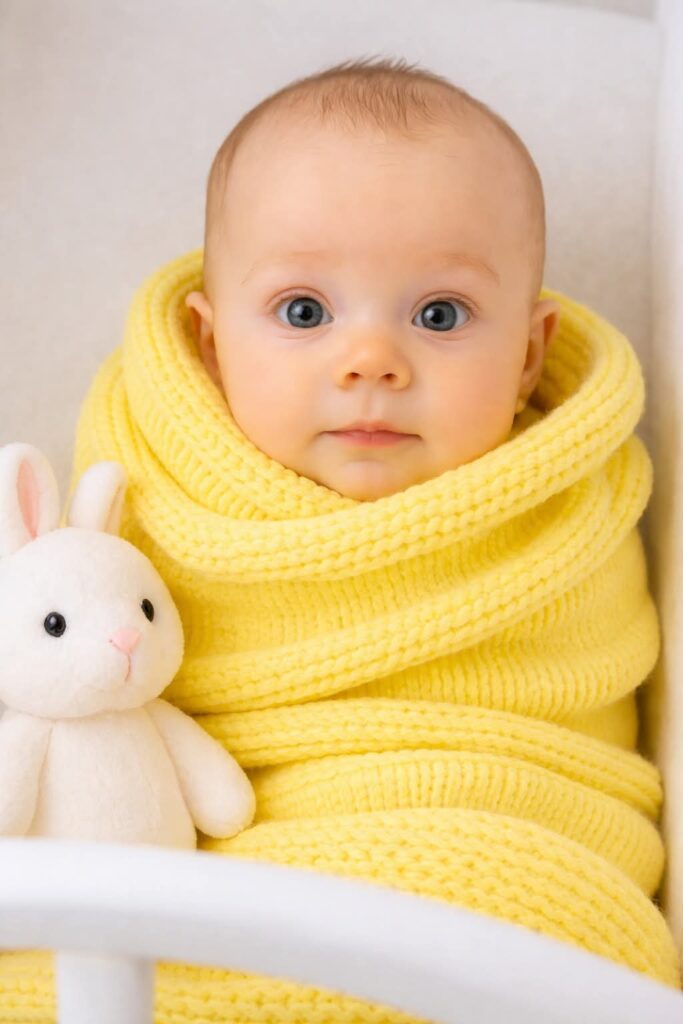
When I woke up, dizzy and weak, a nurse gently placed a baby in my arms.
A tiny girl.
Perfect.
She had delicate features and dark hair like mine.
Tears filled my eyes as love washed over me.
Then I looked for Caleb.
He stood several feet away.
Frozen.
Pale.
“Caleb?” I whispered. “Come meet her.”
He didn’t move.
His hands shook as he stared at her.
“She doesn’t look like me,” he said quietly.
I laughed nervously, assuming shock had taken over.
I told him newborns change, that it meant nothing.
But he stepped back, muttered something about needing air, and left the room.
He never returned that night.
In the days that followed, he was present but distant.
Flowers bought in haste.
Short answers.
No excitement.
He avoided holding the baby.
When she cried, he walked away.
At night, while I fed her, he stared at the wall as if lost inside his own thoughts.
Then he started leaving.
Every night, around the same hour, he slipped out of bed.
When I woke, his side was cold.
His car was gone.
“I just need time to think,” he told me.
But even when the baby slept through the night, he still disappeared.
Exhausted and broken, I followed him.
One night, after he quietly left the house, I wrapped myself in a coat and stepped into the cold darkness.
I kept my distance as his car led me through silent streets.
He stopped in front of a small brick building.
A clinic.
The sign read: St. Mary’s Genetic Testing & Counseling Center.
My heart dropped.
He doubted her.
He doubted me.
Days later, the phone rang while he was in the shower.
I answered.
“Mrs. Harper, this is Dr. Singh. We have the results of your husband’s paternity test.”
There was no genetic relationship.
The room spun.
I had never betrayed him.
Never.
Only one possibility remained.
The hospital.
The next morning, I returned there.
After hours of searching, a nurse came back with a folder and trembling hands.
Two baby girls.
Born minutes apart.
Placed briefly in the same recovery room.
The identification numbers didn’t match.
Our baby had been switched.
When I told Caleb, he collapsed into silence.
He hadn’t doubted me out of cruelty, but out of fear.
Fear of losing everything.
The investigation confirmed the mistake.
Our biological daughter was living just a few miles away.
Meeting her was overwhelming.
She had Caleb’s eyes.
His smile.
But letting go of the baby I had carried, fed, and loved for months nearly broke me.
In the end, both families chose connection over separation.
Love over genetics.
Today, when I watch Caleb hold our daughter, I see more than happiness.
I see gratitude.
Humility.
Healing.
That experience almost destroyed us.
But it taught us something profound.
Love is not proven by blood.
It is built in sleepless nights, silent fears, and impossible choices.
And sometimes, the hardest storms lead us exactly where we were meant to be.