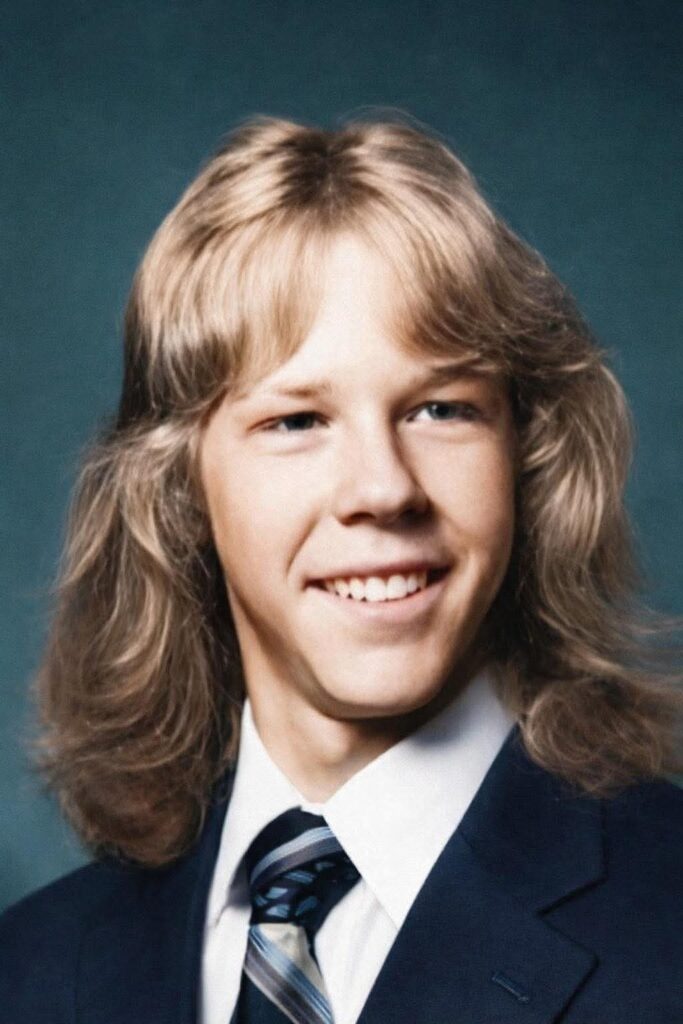
James Hetfield didn’t have the kind of childhood anyone would envy. Growing up in a strict household where even medicine was forbidden because of his parents’ religious beliefs, he felt like an outsider from day one. When his mother died of cancer without seeking medical treatment, it left him with a massive, angry hole in his heart at just sixteen years old. He was a quiet, awkward kid who didn’t know how to handle the grief of losing both parents so young, so he turned to the only thing that felt real: the guitar. Every riff he played and every lyric he scribbled down was a way to scream at a world that had taken his stability away. Music wasn’t just a hobby for him; it was a lifeline that kept him from completely unraveling in a house that felt more like a tomb.
When he co-founded Metallica, he took that raw pain and turned it into the loudest, fastest music anyone had ever heard. He became the face of thrash metal, writing albums like Master of Puppets that would eventually define a whole generation of outcasts. On stage, he was a force of nature—a leather-clad giant with a voice that sounded like thunder. He was the primary songwriter and the rhythmic backbone of the band, pushing them from grimy clubs to sold-out stadiums across the planet. But even as the Black Album turned them into the biggest band in the world and songs like Enter Sandman became global hits, the demons from his past were still riding shotgun. The fame and the money couldn’t fill the void left by his childhood, and he started using alcohol and anger to numb the things he wasn’t ready to face.
By 2001, the wheels were starting to come off. Years of constant touring and unresolved trauma had turned him into a man who was drowning in addiction and rage. It got so bad that he had to step away from the band entirely to enter rehabilitation, a move that many thought would be the end of Metallica. The documentary Some Kind of Monster captured that period, showing the world a vulnerable, broken side of a man who had always been seen as an untouchable rock god. He had to learn how to be a father and a husband without a bottle in his hand, and he had to confront the monster of his own temper. It was a humiliating and public struggle, but he didn’t hide from it. He did the hard, dirty work of rebuilding his life from the ground up, proving that the toughest thing a man can do is admit when he’s beat.
Today, James is more than just a rock star; he’s a symbol of what it looks like to survive your own worst impulses. He’s navigated the long road of recovery and has evolved into a person who values self-awareness over aggression. His journey shows that long-term success isn’t just about how many records you sell, but about whether you can look at yourself in the mirror and like who you see. He still tours the world and plays to millions of fans, but now he does it with a sense of gratitude and discipline that was missing in his younger days. His story continues to inspire anyone who feels like a victim of their circumstances, proving that you can take the heaviest parts of your life and turn them into something beautiful. He stands as a rock legend not just for his music, but for the resilience it took to stay true to his values through the fire.